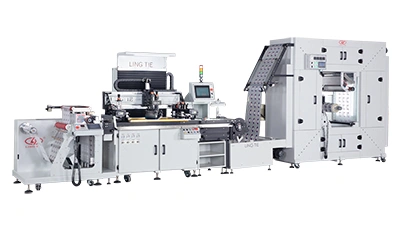

Screen Printing Machines
We develop automatic screen-printing machines for manufacturers requiring reliable, flexible, and high-precision printing solutions across different materials and applications. Combining proven screen-printing technology with automated control systems, our screen-printing equipment supports stable production for industries including packaging, electronics, signage, decorative products, and industrial components.
Screen printing is a versatile printing process that transfers ink through the open areas of a mesh screen onto the surface of a substrate. During printing, a squeegee applies controlled pressure to move the ink across the screen. The ink can pass through the image area and form the desired pattern on the material surface. With the ability to process both sheet materials and roll materials, screen printing can be applied to a wide range of substrates, including paper, glass, metal, ceramics, plastics, textiles, and other industrial materials.
-
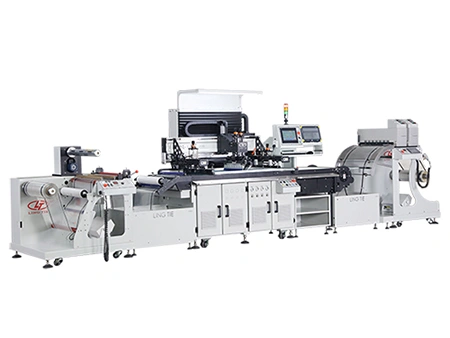
Roll-to-Roll Screen Press
The automatic roll-to-roll screen printing machines integrate unwinding, screen printing, drying or UV curing, and rewinding into a complete automated production system. They support high-precision single-color and multi-color printing with stable operation throughout long and continuous printing cycles on flexible roll materials.
-
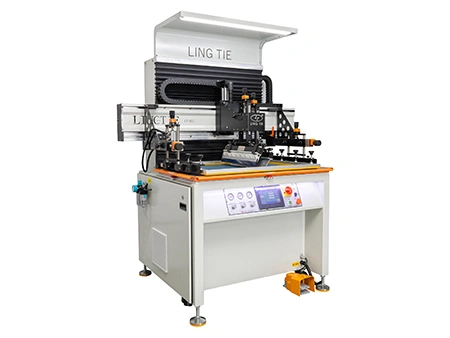
Flat Bed Screen Printing Machine
Flatbed screen printing machines are designed for precision printing on individual sheets and flat materials rather than continuous rolls. During the printing cycles, the substrate is placed on the printing table, while the flood bar spreads the ink across the screen and the squeegee presses it through the mesh onto the surface.
-
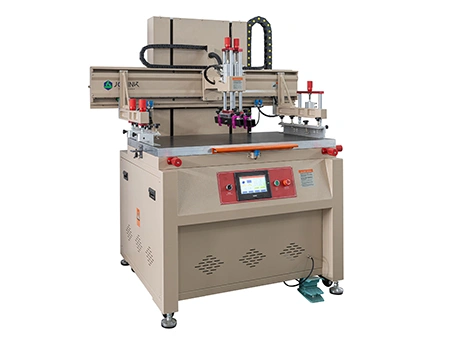
Semi-Automatic Screen Printer
Semi-automatic screen printers are used for printing individual sheets and flat materials in short to medium production runs. To carry out each print cycle, the operator needs to place the substrate on the printing table and remove it after printing, while the screen printer controls the printing stroke and pressure to keep the process consistent from one sheet to the next.
Flexible Printing on Various Surfaces
Screen printing is suitable for both flat and specially shaped surfaces, including curved and irregular components. Thus, it is suitable for products with different shapes and surface structures.
Compatibility with Different Ink Systems
Screen printing supports a wide range of ink types, including oil-based inks, water-based inks, synthetic resin inks, and powder-based inks. Manufacturers have a wide selection to choose the most suitable printing solutions according to different applications and material requirements.
Versatile Color & Pattern Applications
From single-color printing to multi-color registration and halftone printing, screen printing offers various flexible options for producing detailed graphics, decorative patterns, and functional markings.