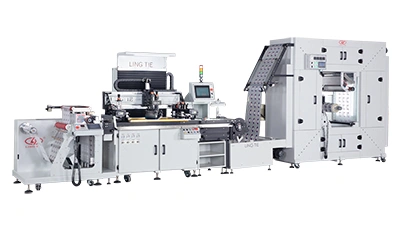
Drying and Curing Systems
The drying and curing systems cover several stages of screen-printing production, from screen drying and material pre-shrinking to ink drying and UV curing after printing. The range includes pre-shrinking machines, tunnel dryers, infrared dryers, screen drying ovens, and UV curing machines, with different heating and curing methods available to match the material, ink, and production process.
-
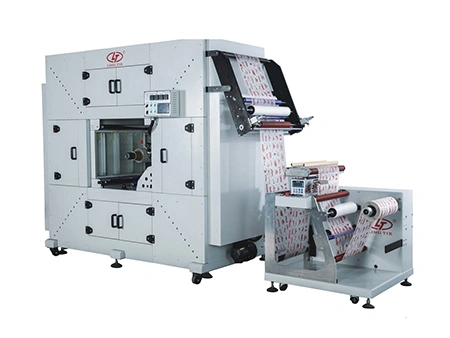
Pre-Treating Hot Air Dryer
Pre-treating hot air dryer pre-shrinks roll materials under controlled heating before they enter the printing process. By the time the material enters the printing process with our hot air dryer, much of the dimensional change caused by heat has already taken place. The result is a more stable substrate and more reliable registration in multi-color printing.
-
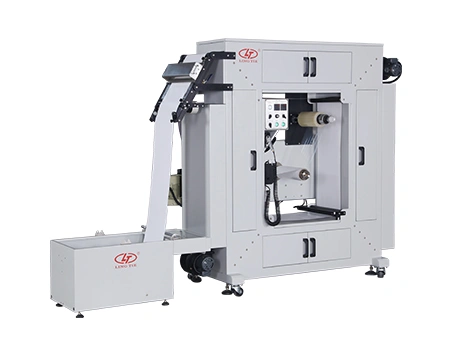
Hot Air Dryer
Hot air dryer works with roll-to-roll screen printing lines for continuous drying at a steady material speed. It can handle ink drying after printing as well as the curing of surface coatings on roll materials. The dryer can be paired with roll-to-roll screen printing machines and can also be installed as a standalone replacement for dryers used with roll-to-roll printing machines from other manufacturers.
-
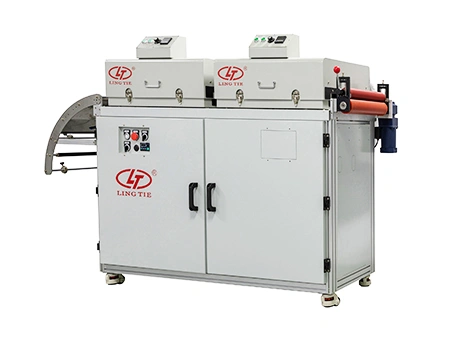
Infrared Drying Oven
Infrared drying oven uses infrared radiation to heat and dry printed materials as they travel continuously through the machine. It is a high-efficiency infrared drying conveyor engineered for fast, reliable curing of printed parts. At the infeed, a vacuum suction plate holds the material steady while at the other end, a pulling motor keeps it moving under tension through the drying section.
-
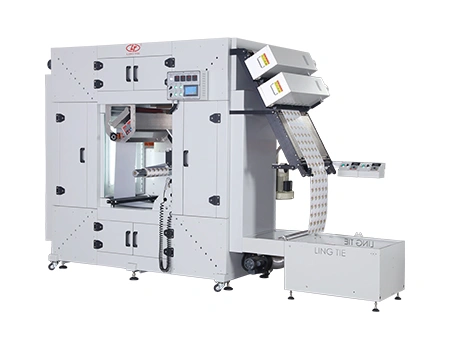
UV Curing Machine
UV curing machine cures UV screen printing inks and UV varnishes immediately after printing. High-intensity UV light triggers the curing reaction, turning the freshly printed ink or coating into a hard, wear-resistant layer within a very short time. This gives the production line a much faster transition from printing to the next process.
-
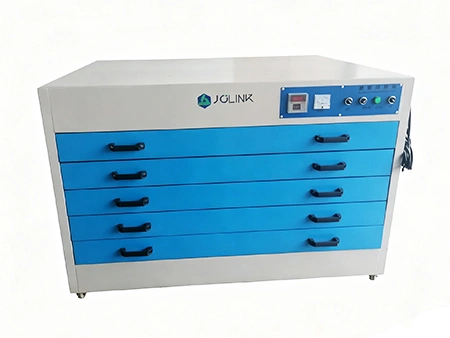
Screen Drying Cabinet
Screen drying cabinet provides a controlled drying environment for screen printing frames after emulsion coating, washing, and other preparation processes before exposure. It removes residual moisture and solvents from the screen and dries the emulsion layer thoroughly, reducing problems such as ink leakage or screen clogging later in printing.
- Hot Air Circulation
Hot air circulation is used across our pre-shrinking machines, tunnel dryers, and screen drying ovens. Centrifugal fans and dedicated air channels circulate heated air throughout the chamber for even temperature distribution. Low-temperature drying is particularly useful for materials that can shrink or deform under excessive heat, and helps maintain dimensional stability when accurate registration is required for multi-color printing. - Infrared Drying
The infrared dryers use radiant heat to bring the material and coating up to drying temperature quickly. A vacuum suction plate at the infeed and a pulling motor at the outfeed keep the material under controlled tension as it passes through the dryer. It's especially useful when web stability needs to be maintained throughout the drying process. - UV Curing
For UV inks and varnishes, the UV curing machines expose the freshly printed surface to high-intensity ultraviolet light. The UV energy triggers rapid curing of the liquid ink or coating into a hard, wear-resistant layer, so printed materials can move on to the next production stage without a lengthy drying period.
The choice of the most suitable dryer comes down to how the material needs to be dried.
- A tunnel dryer uses circulating hot air with four-sided heating for gradual and even drying at relatively low temperatures. For heat-sensitive materials or processes that usually require a longer and more uniform drying path, a tunnel dryer can be the better option.
- In contrast, infrared drying is a more practical choice when faster heating and controlled material tension are important to the process. An infrared dryer transfers heat directly through infrared radiation, so the material heats up faster. Its suction and pulling system also keep the tension through the drying section maintained.